
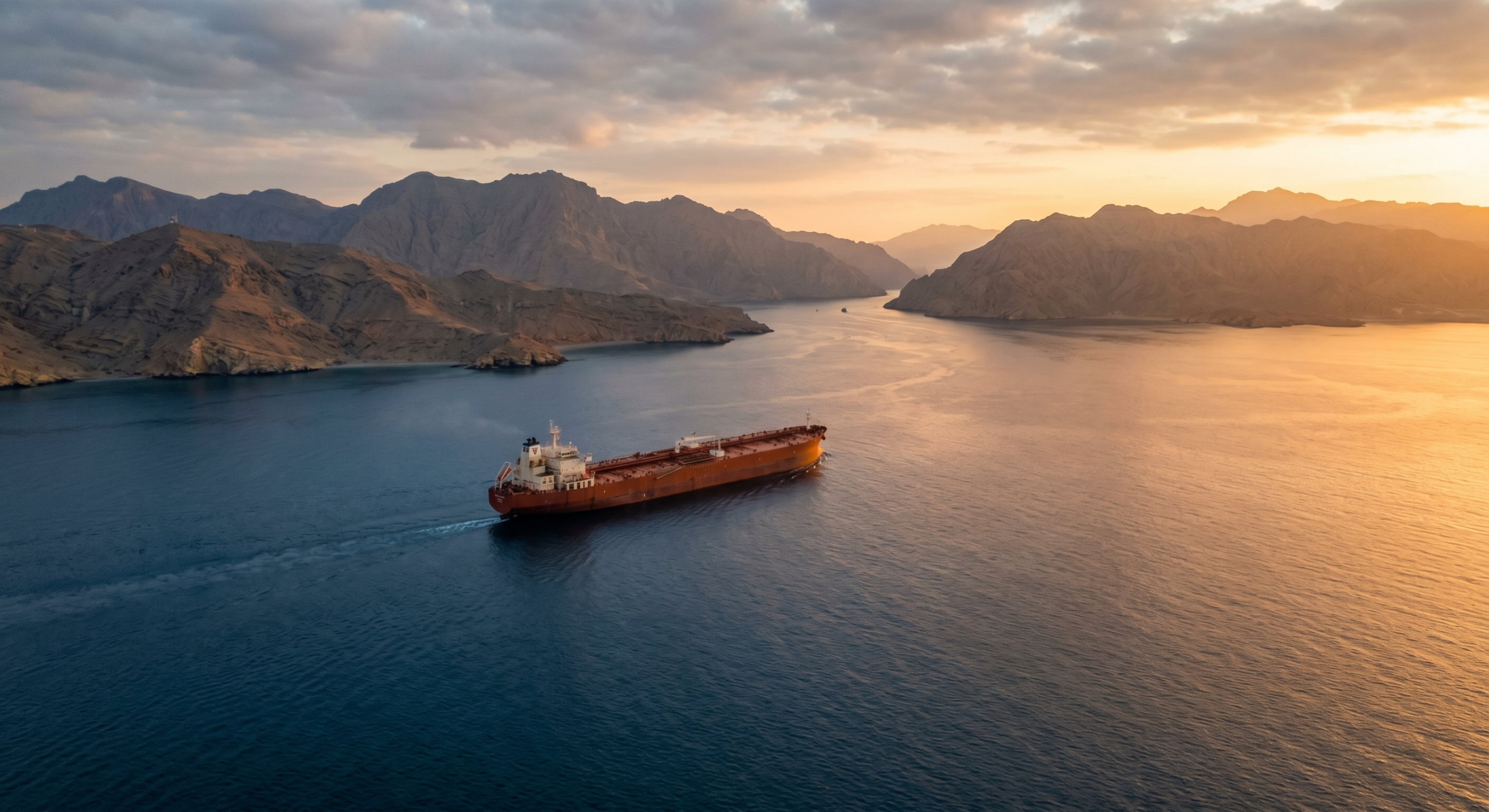
The Strait of Hormuz: The World’s Most Critical Chokepoint
Connecting the Persian Gulf to the open ocean, this narrow waterway drives the global economy.
Where the Gulf Meets the Sea
The Strait of Hormuz lies between Oman and Iran. It connects the Persian Gulf to the Gulf of Oman and the Arabian Sea. It is the only sea passage from the Persian Gulf to the open ocean and is one of the world’s most strategically important chokepoints.
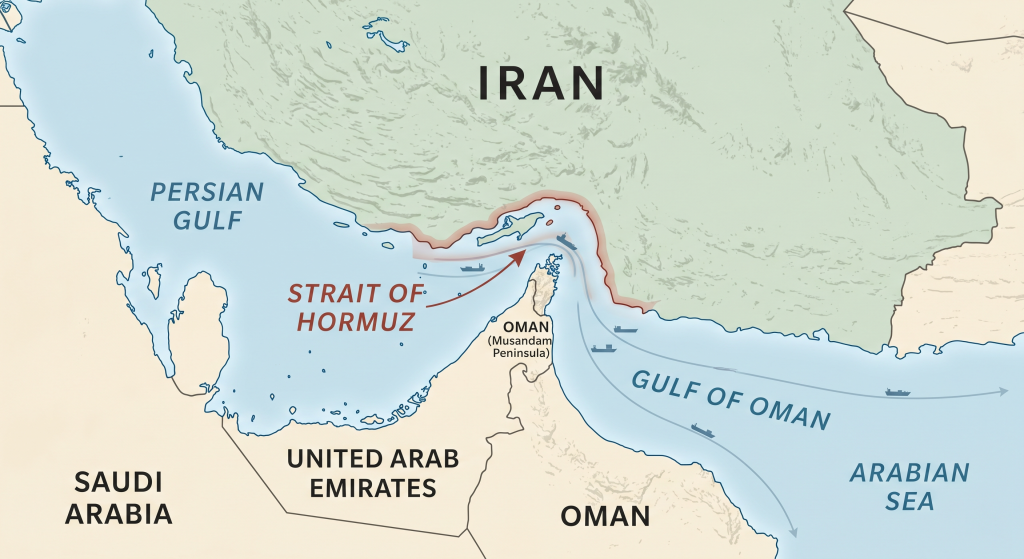
By The Numbers
21 Miles
The width of the strait at its narrowest point.
2 Miles
The width of the inbound and outbound shipping lanes, separated by a two-mile buffer zone.
20+ million
The average number of barrels of oil that pass through the straight every single day.
Fueling The Global Economy
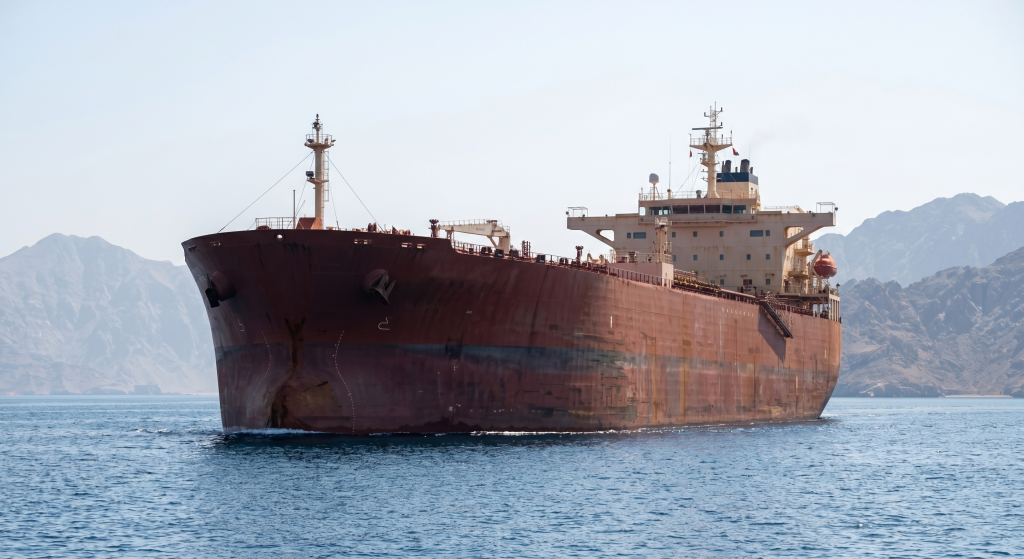
Approximately one-fifth of global oil consumption passes through the Strait of Hormuz. Much of the crude oil exported from Saudi Arabia, Iran, the UAE, Kuwait, and Iraq must transit this route to reach markets in Asia, Europe, and beyond. Additionally, a significant portion of the world’s liquefied natural gas (LNG), primarily from Qatar, relies on this passage.
A Center of Geopolitical Tension
Due to its immense economic importance and narrow shipping lanes, the strait is highly vulnerable to disruption. Border disputes, international sanctions, and regional conflicts often lead to heightened security risks for commercial vessels.
“Any closure or severe disruption of the Strait of Hormuz would send immediate shockwaves through global energy markets and the international economy.”
Global Energy Analysts
Looking Ahead
As the world transitions toward renewable energy, the strategic importance of the Strait of Hormuz may evolve, but for the foreseeable future, it remains the vital artery of global trade.